Real Progress Starts at Home
CareWorks brings evidence-based therapy directly to your doorstep. Our in-home program delivers one-on-one support where your child lives, learns, and grows, so new skills transfer naturally into everyday routines.
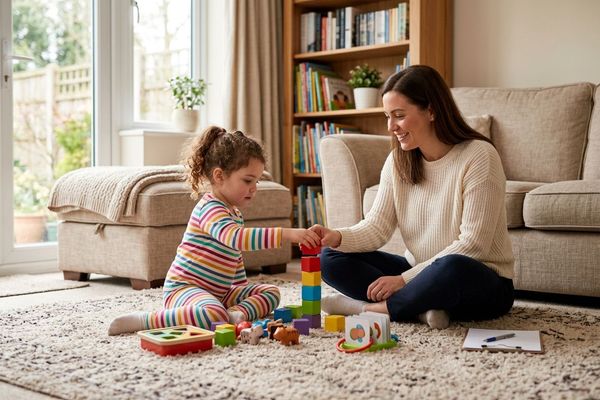
Why Learning at Home Sticks
Your child’s everyday surroundings are the most powerful teaching tool we have. Here is why in-home therapy accelerates progress in ways a clinic simply cannot.
Faster Skill Generalization
Your child learns to navigate real situations, not simulated ones, resulting in faster functional progress across communication, self-care, and behavioral goals.
Family Involvement
Parents, siblings, and caregivers can observe sessions firsthand and learn the same evidence-based strategies used by the therapy team. Learn about our dedicated parent training program.
Real-Life Routines
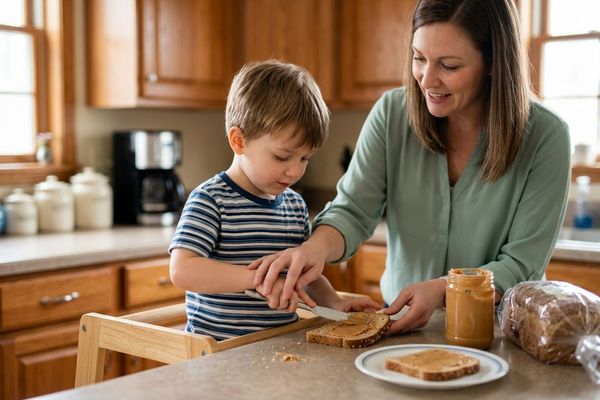
Your therapist works alongside your child using your family’s actual materials, spaces, and schedules to create lasting behavioral change.
Flexible Scheduling
We offer morning, afternoon, after-school, and weekend availability to accommodate work schedules, school hours, and family commitments without adding logistical stress.
Reduced Transitions
Children who struggle with transitions, car rides, or unfamiliar environments often thrive when therapy comes to them, allowing sessions to begin in a calm, regulated state.
Comfort & Security
Your child learns in the place where they feel safest and most comfortable. This emotional security lowers anxiety, increases engagement, and allows your child to focus on learning rather than adjusting to an unfamiliar environment.
How In-Home Autism Support Works
Starting in-home therapy with CareWorks is a straightforward process to minimize wait times and get your child the support they need as quickly as possible. Here is how it works from your first call to your child’s first session and beyond.
BCBA Home Assessment
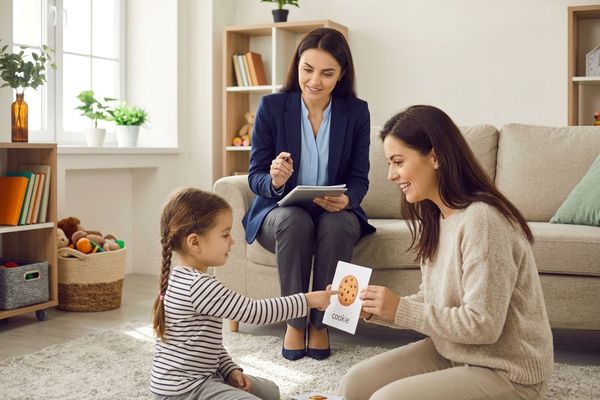
A Board Certified Behavior Analyst visits your home to conduct a comprehensive behavioral assessment. They observe your child in their natural environment, evaluate the physical space, interview you about daily routines and challenges, and administer standardized assessment tools. This home-based evaluation provides uniquely valuable clinical data that informs every aspect of the treatment plan.
Individualized Plan Development
Based on the assessment, your BCBA creates a detailed treatment plan with measurable goals for your child’s home environment. Goals target the specific skills and behaviors your family has identified as priorities, including communication, daily living routines, behavioral challenges, and social interactions that occur naturally in your home.
RBT Matched to Your Family
We carefully match your child with a Registered Behavior Technician based on personality compatibility, skill set, scheduling availability, and your family’s preferences. This matching process is critical because your RBT will become a trusted figure in your child’s daily life and a welcome presence in your home. We take the time to get this match right.
Sessions Begin at Home
Your child’s RBT arrives at your home on a consistent schedule and delivers structured therapy sessions targeting the goals in your child’s treatment plan. Sessions typically last two to four hours and include one-on-one teaching, naturalistic opportunities woven into real routines, and play-based learning. Every session produces measurable data tracked by your therapy team.
Parent Coaching Integrated
Your BCBA regularly coaches you on the strategies being used during sessions so you can reinforce progress throughout the day. Parent training is built into the in-home model, not treated as a separate service. You will learn how to manage challenging behaviors, prompt communication, structure routines for success, and maintain consistent reinforcement systems aligned with your child’s treatment plan.
Data Review & Plan Adjustments
Your BCBA analyzes session data on an ongoing basis and adjusts the treatment plan as your child progresses. Formal reassessments occur at regular intervals, and your family receives transparent progress reports. When your child masters a goal, new targets are introduced. If a strategy needs refinement, the team adapts quickly. This iterative, data-driven approach ensures your child is always moving forward.
In-Home Session Details
Want to Confirm We Cover Your Neighborhood?
Coverage varies by zip across Virginia, North Carolina, and New Jersey. Share yours and we will confirm fast.
Skills That Show Up in Everyday Life
In-home therapy targets the skills that matter most in your child’s everyday life. Because learning happens in context, these skills are immediately functional and naturally reinforced throughout the day.
Daily Living
- Dressing independently
- Eating & mealtimes
- Hygiene routines
- Toileting skills
Communication
- Requesting needs & wants
- Labeling objects & actions
- Conversational skills
- AAC device use
Behavior
- Smooth transitions
- Self-regulation strategies
- Following instructions
- Coping with frustration
Social Skills
- Sibling interaction
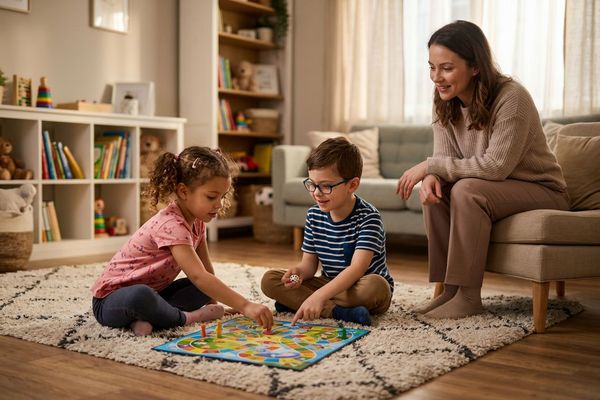
- Sharing & turn-taking
- Eye contact & joint attention
- Cooperative play at home
Every skill area is addressed within the context of your child’s actual home life. Explore our full range of therapy services or learn about how we structure treatment in our How It Works guide.
Is Home-Based Autism Treatment Right for Your Family?
In-home therapy works best when your child’s biggest challenges happen at home. Mealtime refusal, bedtime resistance, morning transition meltdowns, sibling conflict. These are behaviors that can only be addressed in the environment where they actually occur. A therapist who sees your kitchen, your bedtime routine, and your family dynamics firsthand can build a plan that fits your real life.
Families who choose in-home therapy typically share a few things:
Their child is young (under 5) or struggles with transitions to new environments. They want to be present during sessions and learn the strategies themselves. Getting to a center multiple days a week isn’t realistic. Their child’s goals center on daily routines, communication at home, and family interactions. They value the flexibility of morning, afternoon, or after-school scheduling.
Many families start with in-home therapy and later add center-based days for socialization once their child is ready. Your BCBA will help you decide what’s right during the initial assessment.
What Parents Ask About In-Home Therapy
Curious about what in-home sessions actually look like? Here are the questions families ask most before getting started.
The number of hours is determined by your child’s clinical needs and insurance authorization. In-home programs at CareWorks typically range from 10 to 25 hours per week, with sessions lasting two to four hours each. Some children benefit from daily sessions, while others do well with two to three visits per week. Your BCBA recommends the optimal dosage during the initial assessment based on your child’s age, diagnosis severity, and treatment goals. Our care coordinators then work with your insurance provider to secure authorization for the recommended number of hours.
You do not need a dedicated therapy room or any special setup. In-home therapy works within your existing living spaces. Sessions take place in your living room, kitchen, bedroom, bathroom, backyard, or wherever the targeted skills naturally occur. A quiet area with minimal distractions is helpful for structured teaching, but much of the therapy intentionally uses everyday spaces and routines as the learning context. Your BCBA will evaluate your home during the initial assessment and provide practical suggestions for optimizing the environment without requiring significant changes.
Yes. Your child’s RBT arrives at each session with a therapy bag containing all necessary materials, including reinforcers, teaching materials, data collection tools, visual supports, and activity supplies. They will also use items already in your home as part of naturalistic teaching, such as your child’s favorite toys, books, snacks, and household objects. This combination of professional materials and familiar items ensures that therapy feels both structured and natural. You are never expected to purchase specialized equipment or supplies for in-home sessions.
Absolutely. In fact, sibling involvement can be a valuable part of in-home therapy. Your BCBA may incorporate siblings into certain activities to practice social skills like sharing, turn-taking, and cooperative play in the most natural context possible. During some portions of the session, the RBT may need focused one-on-one time with your child in a quieter area, but siblings do not need to leave the home. Many families find that in-home therapy improves the overall dynamic between siblings by teaching everyone new ways to interact positively.
This is actually one of the greatest advantages of in-home therapy. When challenging behaviors occur in the home environment, your therapist can address them in real time, in the exact context where they naturally happen. Your RBT is trained to implement behavior intervention plans designed by your BCBA, using de-escalation strategies, antecedent modifications, and functional communication alternatives. Rather than simulating these situations in a clinic, in-home therapy allows the team to observe, assess, and intervene with challenging behaviors as they organically arise, leading to more effective and lasting behavior change for your family.
CareWorks strives to serve families across our entire service area in Virginia, North Carolina, and New Jersey, including suburban and some rural communities. Our ability to serve a specific location depends on therapist availability and driving distance, but we actively work to expand our coverage area and recruit RBTs in underserved regions. If you live outside our immediate metro areas, we encourage you to contact our care team to discuss your location. We will do our best to match your family with a therapist or help connect you with alternative resources in your area. Check our locations page for current service area details.
Therapy Designed Around Your Family’s Life
In-home therapy is a service delivery model where a trained Registered Behavior Technician comes directly to your family’s home for structured, one-on-one behavioral sessions. The therapy happens in the living room, kitchen, bedroom, and backyard. Real-world spaces where your child’s challenges and triumphs occur every single day.
At CareWorks, our in-home program begins with a comprehensive assessment with a Board Certified Behavior Analyst in your home. This allows the BCBA to observe your child in their natural environment, understand your family’s daily routines, identify environmental factors that influence behavior, and design a treatment plan that addresses the specific situations your family encounters. Your child is then matched with a RBT who arrives at your home on a consistent schedule, typically two to five days per week, to deliver structured therapy sessions for your child’s individualized goals.
The in-home model is grounded in a core principle of behavioral science: skills learned in context generalize faster and last longer. Teaching a child to request a snack using the actual refrigerator, practice bedtime routines in their own bedroom, or navigate social interactions with their siblings. For families who want therapy that integrates directly into daily life, in-home therapy is a powerful choice. Explore how it compares to our center-based program to find the best fit for your child.
Bring Therapy to Your Front Door
Our RBTs travel to homes across Virginia, North Carolina, and New Jersey. Tell us about your child and we’ll schedule your first in-home session.