Expert Care Without the Wait and How ABA Therapy Works
From your very first phone call to your child’s breakthrough moments, CareWorks ABA makes every step of the autism treatment process clear, simple, and supportive. We handle the complexity so you can focus on what matters most: your child.
From First Call to First Session
Three steps. A few weeks. A dedicated care coordinator handles every detail from verification to first session.
Contact Us & We Handle Insurance
Reach out by phone or online form. We will ask a few questions about your child and your insurance; then our billing team verifies your benefits, confirms coverage, and manages prior authorization on your behalf. No insurance runaround, second guessing, or surprise bills.
Your Child’s Assessment & Plan
A Board Certified Behavior Analyst conducts a comprehensive behavioral assessment at one of our centers or in your home. From that evaluation, they build an individualized treatment plan with measurable goals, recommended hours, and strategies tailored to your child. You review and shape the plan together before anything starts.
Therapy Begins
Your child is matched with a dedicated Registered Behavior Technician and begins regular autism therapy sessions. Every session produces real data your BCBA uses to track progress and adjust the plan as your child grows. You will receive regular updates and ongoing parent training so you are always part of the process.
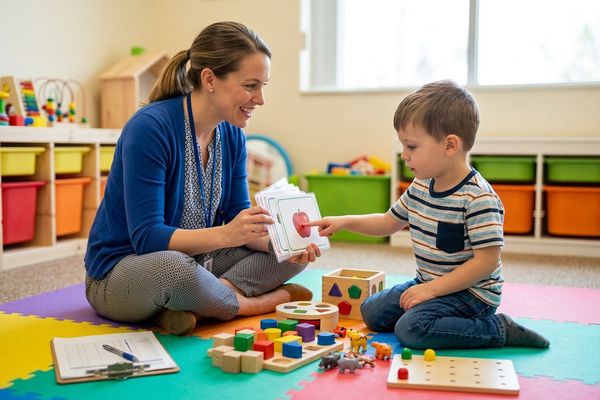
What Happens at the Assessment
The initial assessment is one of the most important steps in the ABA therapy process. It gives your child’s BCBA the clinical data they need to design a treatment plan tailored to your child’s unique profile. Here is what the assessment typically involves:
Direct Observation
Your BCBA observes your child in natural and structured settings, noting communication, play, social interactions, and behaviors.
Standardized Assessments
We use tools like the VB-MAPP to measure your child’s skill levels across language, social, academic, and self-care domains.
Family Interview
Your input is essential. We discuss your child’s history, daily routines, concerns, and the goals that matter most to you.
Functional Behavior Assessment
For challenging behaviors, the BCBA conducts a functional analysis to find the cause and develop proactive strategies.
The assessment typically spans two to four sessions over a period of one to two weeks. Once complete, your BCBA will schedule a meeting to review findings and present the proposed treatment plan.
Still have questions? We’ll walk you through it.
No pressure, no commitment, just a conversation about your child’s options.
Building a Plan Around Your Child
Every child who receives ABA therapy at CareWorks gets a treatment plan custom-built from the ground up. There are no templates, no one-size-fits-all programs, and no cookie-cutter goals. Your child’s BCBA uses the assessment data, your family’s input, and their clinical expertise to create a plan targeting the specific skills and behaviors that will have the greatest impact on your child’s quality of life.
Treatment plans typically address multiple autism domains simultaneously:
Each goal is written in measurable, observable terms so that progress can be tracked objectively through data collection during every therapy session.
Critically, the treatment plan is a living document. Your BCBA reviews the data regularly, typically every two weeks, and makes adjustments as needed. When your child masters a goal, new targets are introduced. If a strategy is not producing results, the BCBA modifies the approach. This iterative, data-driven process ensures your child is always working on the skills that matter most at the optimal level of challenge.

Inside a Typical Therapy Session
Many parents wonder what actually happens during a therapy session. While every session is different based on your child’s goals, here is a general overview of how a typical session flows at CareWorks ABA.
Warm-Up & Pairing
Each session begins with a pairing period where your child’s RBT engages in preferred activities. This builds rapport and reduces anxiety before demands are placed.
Structured Teaching
The therapist works through specific skill programs using techniques like discrete trial training and natural environment teaching. Sessions alternate between structured teaching and naturalistic opportunities.
Social & Play Opportunities
Children practice social skills with peers during group activities and free play. These moments are facilitated to encourage turn-taking and shared attention.
Transition & Wrap-Up
Sessions conclude with transition practice. Your RBT documents notes, and the BCBA reviews data to adjust treatment. Parents receive brief updates after each session.

Session Hours by Service Type
Questions Families Ask Before Getting Started
These are the questions we hear most from families considering therapy for their child.
In most cases, you do not need a physician referral to start ABA therapy, but you will need a formal autism diagnosis from a qualified professional (such as a developmental pediatrician, psychologist, or psychiatrist). Some insurance plans may require a referral or prescription for ABA therapy services, which is something our care coordinators will verify during the insurance check. If your child does not yet have a diagnosis, we can help point you to diagnostic resources in your area to get the process started.
The recommended number of therapy hours varies based on your child’s age, diagnosis severity, specific goals, and clinical needs. Research suggests that children receiving 25 to 40 hours per week of intensive ABA therapy make the most significant gains, particularly when they are young. However, not every child requires intensive services. Some children benefit from 10 to 20 hours per week of focused therapy. Your BCBA will recommend the appropriate dosage during the assessment process, and the final number of authorized hours will depend on your child’s clinical needs and insurance approval.
Many families begin seeing small but meaningful improvements within the first few weeks of therapy, particularly in areas like compliance, communication attempts, and engagement. More significant developmental milestones typically become evident within two to three months of consistent therapy. Long-term transformative outcomes, such as independent communication, school readiness, and substantial behavior reduction, often require six months to two years of intensive services. Your BCBA provides regular data reviews so you can track your child’s progress objectively over time.
Yes. At CareWorks ABA, we encourage parent involvement and transparency. For in-home sessions, parents are welcome to observe at any time. For center-based sessions, we offer scheduled observation opportunities and can arrange for parents to sit in periodically. We also provide detailed session notes and regular parent meetings so you always know what is happening during therapy. Some children perform differently when a parent is present, so your BCBA may discuss the best observation strategy for your child’s specific situation.
It is completely normal for children to experience some initial resistance when starting therapy, especially during the first few weeks as they adjust to new people, routines, and expectations. Our therapists are extensively trained in pairing techniques, which means they spend significant time building rapport with your child through preferred activities before introducing structured demands. Modern ABA therapy is overwhelmingly positive and play-based. If your child shows signs of distress, the therapy team adjusts the approach, pacing, and reinforcement strategies to ensure the experience remains as comfortable and motivating as possible. Most children warm up quickly and begin looking forward to their sessions.
Success in ABA therapy is measured through objective, continuous data collection. During every therapy session, your child’s RBT records detailed data on each targeted skill and behavior. Your BCBA analyzes this data regularly, creating graphs and progress reports that clearly show whether your child is making gains, maintaining skills, or needs a strategy adjustment. We also reassess your child using standardized tools (like the VB-MAPP) at regular intervals, typically every six months, to measure overall developmental progress. Beyond the numbers, we consider real-world outcomes: Is your child communicating more effectively? Are challenging behaviors decreasing? Is your family’s quality of life improving? These are the metrics that matter most.
You’ve Seen the Process. Ready to Start?
You know the steps. Your care coordinator handles everything else. Reach out and a real person guides you from verification to first session.