The Earlier You Start, the Further They Go
The first few years of your child’s life shape everything that follows. CareWorks harnesses the brain’s peak window of neuroplasticity to build communication, social, and daily living skills in toddlers and young children on the autism spectrum, when it matters most.
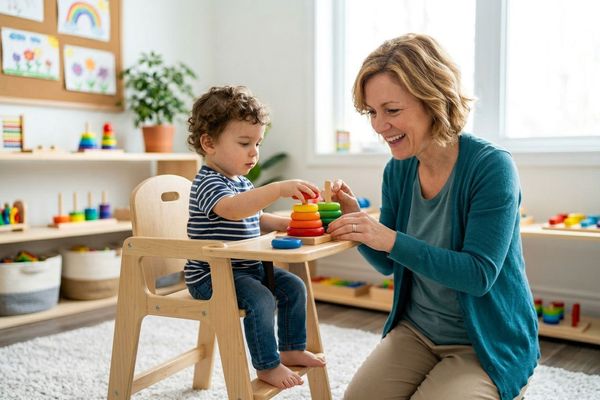
Building Skills During the Brain’s Most Powerful Window
Early intervention is a specialized form of Applied Behavior Analysis (ABA) designed specifically for toddlers and young children between 18 months and six years of age. During this time, a child’s brain is forming over one million new neural connections every second. It is the most productive period for targeted behavioral and developmental therapy.
Research published by the American Academy of Pediatrics and the National Institute of Child Health and Human Development consistently demonstrates children who begin ABA-based early intervention show IQ gains of 9 to 17 points compared to control groups. These improvements are not temporary: longitudinal studies confirm the cognitive, social, and adaptive gains achieved through early intervention persist well into adulthood. At CareWorks, our early intervention program combines evidence-based techniques with the warmth and patience that toddlers need to feel safe, engaged, and motivated to learn.
1M+
Neural Connections per Second
9-17
IQ Points Gained (Research)
18mo
Earliest Start Age
AAP
Endorsed by Pediatricians
The Science Behind Starting Early
Experts agree across the board: during the first three years of life, a child’s brain undergoes explosive growth, forming neural pathways at a rate that will never be matched again. This period of synaptic overproduction creates a window of opportunity: the brain is wiring itself for language, social connection, motor coordination, and self-regulation. For children on the autism spectrum, targeted intervention during this window can redirect developmental trajectories in ways that become progressively more difficult as the brain matures and synaptic pruning accelerates.
A landmark study published in the journal Pediatrics followed children who received intensive early intervention and found that gains in cognitive functioning, adaptive behavior, and language were sustained 18 years later. Children who began therapy before age three showed the most dramatic improvements. The data is clear: the earlier you begin, the greater the benefit. If you have concerns about your child’s development, the time to act is now. Reach out to CareWorks to schedule a comprehensive assessment.

Still Waiting on a Diagnosis? You Don’t Have to Pause.
We support families during the evaluation process so the brain’s peak window does not close while paperwork moves.


Play With Purpose: How Toddlers Learn Best
Early intervention for toddlers looks very different from the structured behavioral therapy designed for older children. At CareWorks, our early intervention program is fundamentally play-based, drawing from Naturalistic Developmental Behavioral Interventions and concepts from the Early Start Denver Model (ESDM). Your child’s BCBA designs sessions around activities your toddler already enjoys, embedding learning opportunities within the natural flow of play, exploration, and daily routines.
During a typical session, you might see your child’s therapist sitting on the floor, engaging your toddler with bubbles, blocks, books, or sensory materials. What looks like simple play is actually a carefully structured teaching interaction. The therapist uses strategies like pivotal response training, incidental teaching, and natural environment training to build communication, joint attention, and social reciprocity in a way that feels joyful and motivating rather than clinical or rigid.
This approach works because toddlers learn best when they are emotionally engaged and intrinsically motivated. Forced compliance and repetitive drills are not appropriate for this age group. Instead, we follow the child’s lead, create opportunities for communication and connection, and reinforce every attempt at social interaction. Parents are actively involved in sessions, learning to embed these same strategies into mealtimes, bath time, outings, and bedtime routines. Explore our parent training program to learn how we coach caregivers to extend therapeutic progress into every hour of the day.
Where You Will See Growth First
Our early intervention program systematically targets the foundational developmental milestones that serve as building blocks for all future learning. Your child’s BCBA will assess their current skill levels across four core domains and create individualized goals that are both ambitious and achievable.
Communication
- First words and labeling objects
- Requesting wants and needs
- Responding to their name
- Two-word combinations
Social Skills
- Joint attention and shared focus
- Eye contact and social referencing
- Shared play and turn-taking
- Social smiling and reciprocity
Motor Skills
- Fine motor grasping and pinching
- Self-feeding with utensils
- Stacking, sorting, and building
- Pointing and gesturing
Adaptive Living
- Toileting readiness skills
- Dressing and undressing
- Following simple routines
- Transitioning between activities
Every milestone your child reaches builds the foundation for the next one. Our BCBAs track progress across all four domains and adjust goals as your child grows. Learn more about our full range of therapy services or how treatment works at CareWorks.
Signs Your Toddler May Benefit from Early Autism Support
Trust your instincts. If you notice several of these patterns in your toddler, do not wait until the next well-visit to bring them up.
No babbling by 12 months
Most infants begin babbling consonant-vowel combinations by 6-9 months.
No pointing or gesturing by 12 months
Pointing to show interest or request is a key social communication milestone.
No single words by 16 months
Children typically produce their first meaningful words between 12-16 months.
No two-word phrases by 24 months
By age two, most children combine words spontaneously (not just echoing).
Loss of previously acquired skills
Regression in language or social skills at any age warrants immediate evaluation.
Limited eye contact or repetitive movements
Persistent hand flapping, rocking, or avoidance of eye contact may be early indicators.
If your child is showing any combination of these signs, we encourage you to contact CareWorks for a free consultation. A professional assessment can provide clarity, and starting intervention early gives your child the strongest possible foundation. You can also verify your insurance benefits before your first appointment.

What Parents Ask Us About Early Intervention
Here are the answers to the questions parents ask us most about getting their toddler started in therapy.
The ideal time to begin early intervention is as soon as developmental concerns are identified, which can be as young as 18 months. Research consistently demonstrates that children who begin ABA-based intervention before age three experience the most significant and durable gains in communication, social skills, and cognitive development. The brain’s neuroplasticity is at its peak during the first three years of life, creating a biological window of opportunity that diminishes over time. Even if your child does not yet have a formal autism diagnosis, CareWorks can help you navigate the evaluation process and begin therapeutic support while you await diagnostic results. The earlier you start, the better the outcomes.
While most insurance providers require a formal autism spectrum disorder diagnosis to authorize ongoing ABA therapy services, you do not need a diagnosis to contact us and begin the process. Many families reach out to CareWorks while they are still waiting for a diagnostic evaluation, which can take several months depending on your area. Our team can guide you toward local diagnostic providers, help you understand the evaluation process, and in some cases begin initial assessments and consultations so that therapy can start as quickly as possible once authorization is secured. The waitlist for a diagnosis should never delay your first conversation with us.
This is one of the most common concerns parents share with us, and it is completely understandable. Early intervention for toddlers is not the same as structured table-based therapy for older children. Our approach is fundamentally play-based and child-led. Sessions take place on the floor, in the backyard, at the kitchen table, or wherever your child naturally plays and explores. Your toddler will not be sitting in a chair completing worksheets. Instead, our therapists embed learning opportunities within activities your child already enjoys, like bubbles, blocks, music, and sensory play. The therapy looks like play because it is play, but every interaction is carefully designed to build communication, social connection, and developmental skills. Children as young as 18 months thrive in this type of naturalistic environment.
Early intervention uses the same evidence-based principles as behavioral therapy for older children, but the delivery method is adapted for the developmental stage of toddlers and preschoolers. While therapy for school-age children may include more structured activities, discrete trial training at a table, and academic skill building, early intervention prioritizes naturalistic teaching, incidental learning, and play-based interactions. Goals focus on foundational skills like joint attention, first words, responding to their name, eye contact, shared play, and basic self-care rather than academic or complex social skills. Our therapists follow the child’s motivation and interests to create organic learning moments rather than directing the child through a predetermined sequence of tasks. Visit our services overview to compare our center-based and in-home options for all age groups.
The recommended number of therapy hours depends on your child’s individual needs, age, and the clinical recommendations of their Board Certified Behavior Analyst. Toddlers in early intervention typically receive between 10 and 25 hours per week of direct therapy. Research indicates that higher-intensity programs (20-25 hours per week) generally produce faster and more robust outcomes, but the optimal schedule must also account for your child’s tolerance, your family’s routine, and insurance authorization. Your BCBA will recommend an appropriate dosage during the initial assessment and adjust it over time as your child progresses. We also provide caregiver coaching so that therapeutic strategies extend well beyond the hours your child spends in direct sessions.
Yes. In fact, this is one of the most important things to understand about early intervention. When therapy looks like play, it means the therapist is doing their job. Toddlers learn best when they are emotionally engaged, intrinsically motivated, and having fun. Every playful interaction during your child’s session is carefully orchestrated to target specific developmental goals. When the therapist blows bubbles and then pauses, they are creating an opportunity for your child to request “more” through words, signs, or gestures. When they build a block tower and knock it down together, they are working on joint attention, turn-taking, and shared enjoyment. Every data point is recorded, analyzed by your BCBA, and used to refine the treatment plan. The play is the vehicle; the learning is the destination. If you would like to understand exactly what is happening during your child’s sessions, ask your BCBA for a session observation walkthrough.
The Earlier You Start, the Bigger the Impact
Research shows the biggest gains come from ABA started before age five. We prioritize early intervention families and move fast.