Build a Foundation That Will Hold Everything Else
The earlier support begins, the stronger the foundation becomes. Foundations is built for children ages 0–4, when neuroplasticity peaks and small interventions reshape lifelong outcomes. We focus on the skills your child needs to communicate, connect, and thrive.
 Why Ages 0–4 Matter
The Years That Set the Trajectory
Early childhood is the most critical window for brain development. During the first four years, your child’s brain forms over a million new neural connections every second, wiring itself for language, social connection, and self-regulation faster than at any other point in life.
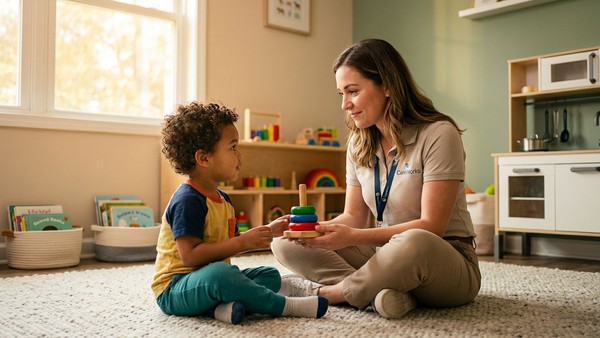
Research from the American Academy of Pediatrics and longitudinal autism studies consistently shows that ABA therapy started before age five produces significantly better outcomes in communication, behavior, and independence than therapy started later. At CareWorks, our Foundations program focuses on the developmental priorities of these early years: language and communication, social engagement and connection, reducing challenging behaviors before patterns harden, and building the foundational learning skills everything else depends on. We pair evidence-based ABA with the warmth and patience that toddlers actually respond to. Learn more about our Early Intervention methodology, the clinical engine inside Foundations.
Brain Volume Reached by Age 3
9-17
IQ Points Gained Through Early ABA
0-4
The Foundations Window
18+ yrs
Sustained Outcomes Confirmed
The First Wins You Will Actually Feel at Home
Foundations work shows up in small, specific moments at home. The first time your child points instead of pulling your hand. The bedtime that did not end in tears. The morning your kid asked for “more cereal” with words. Here is what early progress looks like from your vantage point as a parent, not the clinical chart.
First Words & First Requests
- Pointing to ask for what they want
- Naming favorite people, foods, toys
- Trading a hand-pull for a word or sign
- Saying “more” or “all done” on their own
Calming the Storm
- Fewer meltdowns at transitions
- Asking with words instead of crying
- Recovering faster after big feelings
- Tolerating “wait” without escalating
Engagement You Can Feel
- Looking at your face when something is funny
- Bringing a toy over to share
- Taking turns in a simple game
- Following your point and your gaze
Family Routines That Actually Work
- Sitting through a meal without leaving
- Getting through bedtime without a fight
- Putting on shoes without a meltdown
- Moving from one place to another with less resistance
Start Building Your Child’s Foundation Today
The first four years set the trajectory. Let’s make them count.
Real Skills Belong in Real Life
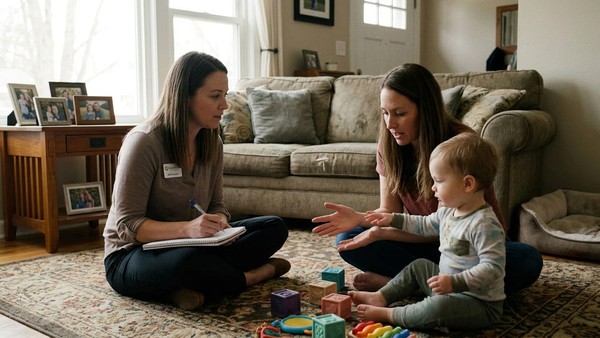
Therapy does not happen in a vacuum. Foundations meets your child where development actually unfolds: on the kitchen floor, in the playroom, at the table during meals, and in the spaces your family already lives. We deliver across three settings so the right environment matches your child’s temperament and your family’s rhythm.
Sessions in the environment where your child already lives, plays, and learns. Skills transfer naturally because they are taught where they belong.
Purpose-built therapy spaces in Suffolk, VA and Greensboro, NC with sensory rooms, peer interaction, and structured routines that prepare children for school.
Natural environments
Parks, grocery stores, community spaces. The real-world settings where lasting progress is proven and generalized.
Real progress happens when skills transfer to everyday life, not just a therapy room. Your BCBA recommends the right setting mix at intake and adjusts as your child grows.
Why Families Choose CareWorks for the First Years
Foundations is led by senior Board Certified Behavior Analysts who specialize in early childhood. Our clinical team brings deep expertise in early intervention, assent-based ABA, verbal behavior, and play-based learning, paired with the patience and creativity that toddlers and preschoolers actually respond to.
Individualized, never cookie-cutter
Every Foundations plan is built from your child’s starting profile, not a template. Goals evolve as your child does.
Parent collaboration baked in
You are part of the program. Our parent training teaches you the same strategies our clinicians use so progress continues at every meal, bedtime, and outing.
Real-world skills, not compliance
We measure success by communication, connection, and independence in your child’s actual life, not by how well they sit at a table.
Built to bridge into Pathways
When your child approaches age 4, the team gradually shifts focus toward school-readiness. The clinical relationship stays continuous; the goals grow with your child.

What Parents Ask Us About the Early Years
Here are the questions we hear most from families considering Foundations for their toddler or preschooler.
Foundations is a program organized by your child’s age and developmental stage. Early Intervention describes the clinical methodology and service modality used during these years. Most Foundations families receive Early Intervention as the underlying delivery method. Think of Foundations as your family’s holistic experience and Early Intervention as one of the evidence-based approaches that powers it.
A formal autism spectrum disorder diagnosis is needed for insurance authorization of ongoing ABA therapy. But you do not need a diagnosis to start the conversation with us. Many families reach out while still waiting for an evaluation, which can take months in some areas. We can guide you toward local diagnostic providers, help you understand the process, and in some cases begin parent coaching and initial assessments before authorization clears so therapy can start the moment it is approved.
Play-based and child-led. Sessions happen on the floor, in the kitchen, in the backyard, or wherever your toddler naturally explores. You will see your child’s therapist with bubbles, blocks, books, or sensory materials. What looks like simple play is carefully designed teaching: every interaction targets specific developmental goals like first words, joint attention, eye contact, or shared play. Toddlers learn best when they are emotionally engaged, not when they are sitting at a table being drilled.
Toddlers in Foundations typically receive between 10 and 25 hours per week of direct therapy. Research suggests higher-intensity programs (20-25 hours per week) generally produce the fastest and most durable outcomes, but the right number for your family depends on your child’s tolerance, your routine, and what insurance authorizes. Your BCBA recommends a starting dose at the initial assessment and adjusts as your child grows. Our parent training program extends the impact of every direct hour into mealtimes, bedtimes, and daily transitions.
There is no hard cutoff at the 4th birthday. As your child approaches the bridge between Foundations and Pathways, your BCBA gradually shifts the goal set from foundational developmental skills toward school-readiness work: peer interaction, two-step directions, group routines, classroom-style transitions, and self-management. Your clinical team and supports stay continuous; the goals evolve with your child.
That is exactly what the bridge into Pathways (ages 4-6) is designed to deliver. Foundations builds the developmental groundwork: communication, social engagement, behavior regulation, and early learning skills. Pathways then targets the specific demands a kindergarten classroom will expect. Together they prepare children for the structured rhythm of school in a way that respects who your child is becoming.
The Window That Won’t Stay Open
Between 18 months and four years, your child’s brain wires faster than at any other point in life. We can start before the diagnosis is final and move fast once it lands.