Discrete Trial Training: One Skill at a Time, Until It Sticks
A short, structured teaching cycle that breaks a goal into the smallest possible step, presents it the same way every time, and reinforces the right answer the moment it happens. DTT is one of the most studied teaching strategies in ABA, and the one your child’s BCBA reaches for when a skill needs precision before it can become natural.
What a Discrete Trial Actually Looks Like
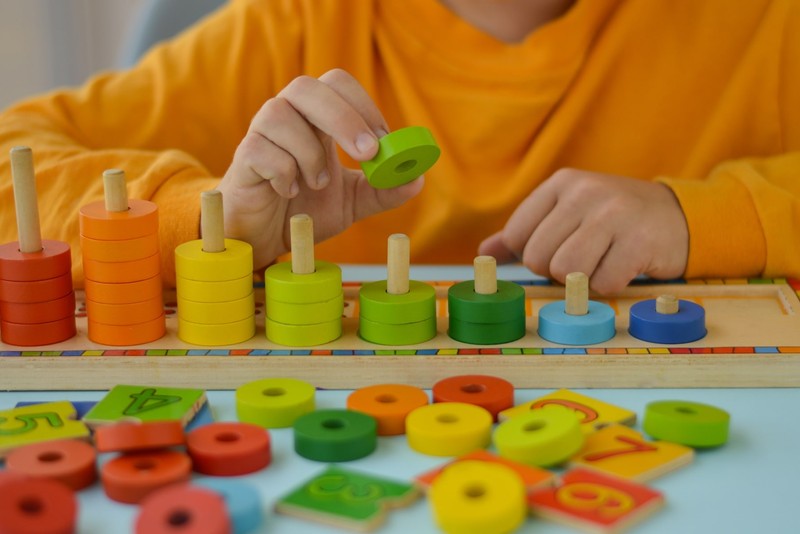
At its simplest, a discrete trial is the smallest possible teaching unit. An instruction, a response, and a result, completed in seconds and repeated many times across a session. It is one of the most precise tools in your child’s BCBA’s kit, and it is the format we reach for when a goal needs the same instruction, the same materials, and the same reinforcement, again and again, until the skill is reliably your child’s.
The Cue
Antecedent
The instruction or stimulus opening the trial. Same wording and materials every time.
The Help
Prompt
A verbal, visual, or modeled cue helping your child land the right answer, faded as data allows.
Your Child
Response
What your child does next. Recorded as correct, prompted, or no response on every trial.
The Reinforcer
Consequence
Immediate reinforcement for the right answer, or a correction strategy for an attempt needing support.
Strung together, those four moments are a single trial. Strung across a session, they become practice. Strung across weeks, they become a skill your child owns. The point is not the table or the timer. The point is the precision. You can find this and the rest of the language your BCBA uses in the ABA Building Blocks glossary.
Why DTT Works When a Skill Just Will Not Click
The features parents notice once they sit in on a session. Each one earns its place because of what it does for the data, the dignity of the child, and the speed at which a skill is acquired.
Predictable Format
Every trial has the same beginning, middle, and end. For a child who finds the world unpredictable, that consistency is what makes new learning safe enough to attempt.
Built Around Your Child
Targets, materials, prompts, and reinforcers are all chosen by your BCBA for your child specifically. There is no generic curriculum being run on autopilot.
One Tiny Step at a Time
A complex goal like asking for help or putting on shoes is broken into the smallest sub-skills. Each one is taught and mastered before the next is introduced.
Repetition With Purpose
Reps are not busy work. They are the path to mastery, and they are faded with a plan once your child is reliably independent on a target.
Prompt and Reinforce in the Same Beat
A clear cue, the right amount of help, and immediate reinforcement for an effort. The feedback loop tightens learning and keeps confusion from settling in.
Data on Every Single Trial
Response-by-response tracking is the difference between guessing what works and knowing. Your BCBA reviews it in supervision and changes the plan when the data calls for it.
Wondering if DTT belongs in your child’s plan?
Your BCBA decides which teaching methods fit which goals. Talk to our intake team and we will set up a free assessment.
Where DTT Stops and Naturalistic Teaching Begins
DTT is built to acquire a brand-new skill quickly and reliably. It is the right tool when your child has not yet learned to label a color, request a snack, or imitate a clap. The structure removes guesswork, the repetition builds fluency, and the data tells the BCBA exactly when the skill is locked in.
Once a skill is reliable in trials, the question shifts from can my child do this to does my child use this in real life. That is where Natural Environment Teaching takes over. The same target moves out of the structured trial and into the playground, the kitchen, and the car. DTT and NET are not competing methods. They are different chapters of the same plan, and most CareWorks plans run them in parallel.

The Skills DTT Builds Best
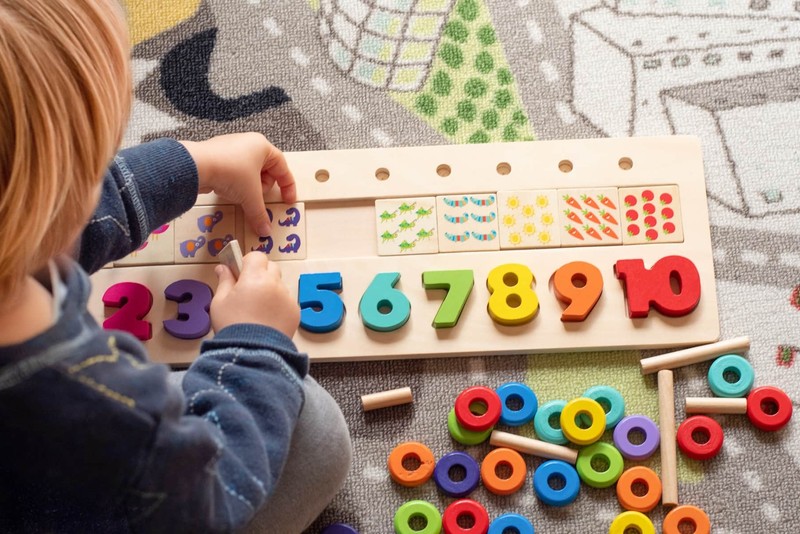
DTT is at its strongest with discrete, repeatable targets where the right answer is unambiguous. These are the kinds of goals where you will see your BCBA reach for it most often.
Once any of these is solid in trials, the very next responsibility your BCBA owns is generalization, which is where naturalistic teaching takes over. The goal of DTT is never DTT. It is your child being able to do the thing in real life, with whoever is in the room.
What Parents Ask About DTT
The questions parents bring to us most often once they have read this far. Honest answers, no jargon.
DTT shares its lineage with the Lovaas model from the 1980s, which means it shares the same core teaching cycle: a clear instruction, a measured response, and an immediate consequence. What modern DTT does differently is the relationship around that cycle. Today’s practice is assent-based, which means your child opts in by reaching for the teaching materials or showing motivation, and the BCBA pairs every session with reinforcers your child genuinely enjoys before any teaching demand is placed. The peer-reviewed evidence base for behavioral teaching, including the Cochrane 2018 systematic review, has continued to refine the model. CareWorks BCBAs use the modern, child-led version. Crying through drills is not the practice we run.
Your BCBA decides per-goal, not per-program. Most plans use both. DTT tends to dominate the early acquisition phase, when a brand-new skill needs the precision of a structured trial to take hold. Once that skill begins to land, your BCBA shifts toward naturalistic teaching so the same skill shows up in real life: at mealtime, in the car, at the playground. The mix is reviewed at every supervision and adjusted as your child grows. There is no set ratio, and you should not have to ask for one.
A meltdown at the table is a signal, not a failure of DTT. The first thing your BCBA does is rule out the obvious: is the demand too hard, is the reinforcer the wrong one, has motivation been paired before the work began. Modern DTT is delivered with assent and breaks built in, and the teaching surface does not have to be a table. We routinely embed discrete trials into floor play, the couch, or wherever your child is regulated and willing. If a tabletop format is contributing to dysregulation, your BCBA changes the format. Reach out if this is the question keeping you from starting.
Want to Know if DTT Is Right for Your Child?
Your BCBA chooses which teaching methods fit which goals. A short call walks you through what an assessment looks like and where structured teaching fits in.